
As I’ve grown older, I’ve taken more opportunities to look back at “what was and what could have been”, especially when it comes to camera gear. I found myself about 10 years ago desiring to build a camera collection, starting with the camera models I’ve used over the years. As I moved along this road, I began to include pieces that were technically interesting to me in one form or another. That’s how I came to acquire the EOS RT in my collection.
The EOS RT was introduced in 1989 as a tool for sports and wildlife photographers. It was based on the EOS 630 and included two distinct features:
- A fixed, semi-transparent pellicle mirror that gave the photographer a continuous view of the subject while the shutter fired, allowing them to track moving subjects while shooting.
- A shooting mode called RT (“Real Time”) that reduced the lag between pressing the shutter button and shutter release from the standard 40 milliseconds to 8 milliseconds, allowing the camera to shoot up to 5 frames per second – a speed that seems modest today but was highly innovative for its time.
Only 25,000 EOS RT bodies were manufactured, making it one of the rarest (if not *the* rarest) of EOS cameras. So, when I came across an online auction for one in 2023, I jumped at the chance and picked it up. When it arrived I checked it for functionality and found it was in good working condition, and I made a plan to put it to use “someday”.
“Someday” arrived three years later after I had acquired a working EOS 620, one of the first EOS models to be introduced. I decided to take both of them out on a shoot to compare how they handled and the quality of images each could capture (the 620 portion of the shoot is covered in my blog post “Shooting With The Oldest EOS”). Much like the 620, adjusting to handling the RT was a welcome challenge compared to my current stable of larger and heavier DSLRs with battery grips, but in this case I did have one small advantage over the 620 – the RT has a LGR10 extended grip, a Canon accessory that replaces the standard handgrip with a longer and slightly wider version, making it easier for someone with larger hands (like me) to hold the camera. I decided to share the same “era appropriate” lens between the two cameras for the day with no image stabilization or modern optical coatings, which completed the vintage setup.
Like the 620, the location for the RT shoot was also a local cemetery, but that’s where the similarity ends. This was a much smaller facility that is affiliated with the local Catholic church, and while it didn’t offer a large quantity of monuments and scenes, it did have a rich variety to work with. Its smaller size also allowed me to walk most of it easily, moving in and around the monuments more intimately to find subjects that would give me a sense of what the camera was capable of producing.


While many of the markers are similar to the ones found at the municipal cemetery for the everyday citizens, veterans, and the like, it was clear that a number of families interred here were closely focused on piety, faith, and belief.
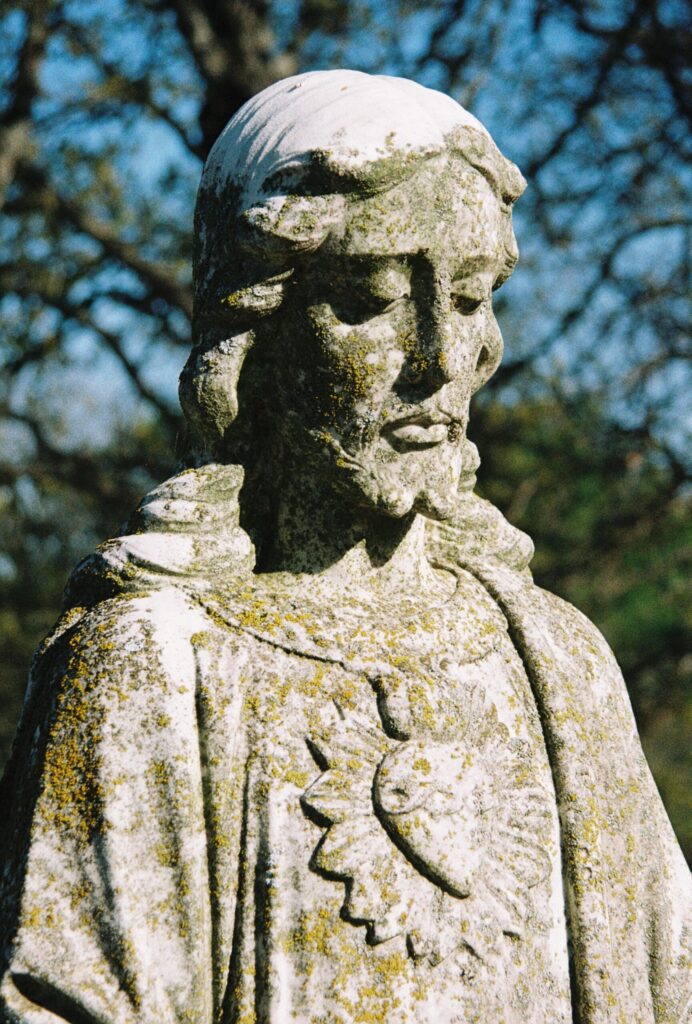

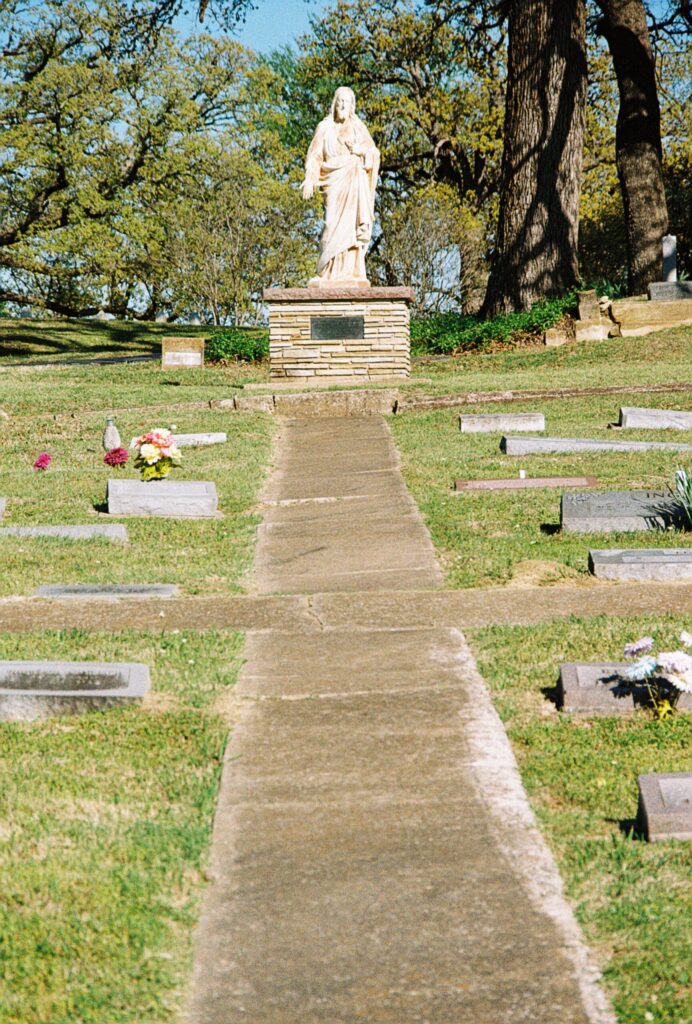
A particularly poignant find during my walk was a pair of infant graves, set aside from the main burial areas but lovingly tended just the same.

Overall I found handling the RT was very similar to the 620 – a little awkward at first due to its substantially smaller size compared to my DSLRs, but the addition of the extended grip gave my hand more surface to work with and I quickly developed a comfortable hold. While I didn’t have a need to try the RT mode, I did notice the difference the pellicle mirror makes. I practiced a few tracking shots and agree the continuous view would have been an advantage to use on moving subjects. In addition, the lack of mirror movement (or “slap”) makes the camera slightly smoother and quieter shooting, reducing mirror-induced shake that can affect images at certain shutter speeds. The images I captured showed the RT could still hold its own 37 years after it was first brought to market.
Will I use this camera regularly? Not likely as this is such a rarity I would not want to risk damaging it through frequent use. But I could see myself using it for special situations or when another nostalgic bug bites.
Technical Summary
- Camera: Canon EOS RT
- Lens: EF 35-135mm f/4-5.6 USM
- Film: Kodak Kodacolor 200, 36-exposure roll
- Location: Calvary Cemetery, Denison TX
- Date: 3/21/2026
- Time: Mid-afternoon, approx. 3:30pm
- Weather: Clear skies, low 80s
[All images taken by me and subject to copyright. Credit to Process One in Overland Park, KS for film processing and scanning.]